
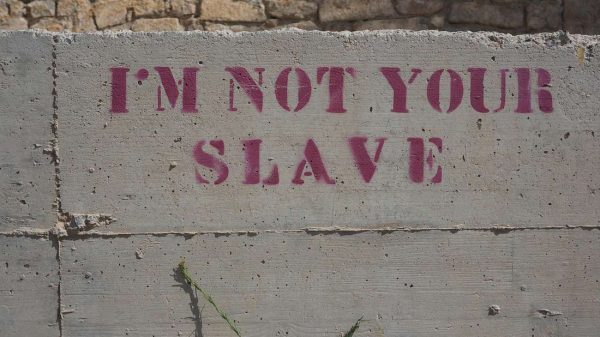
In contemporary legal and sociopolitical discourse, there has been a paradigmatic shift from confronting tangible, real threats to the relentless management of abstract, statistical risks. Coined by Ulrich Beck as the “risk society,” this transformation characterizes neoliberal governance, where uncertainty is commodified and where fear, anticipation, and mitigation strategies dominate public and private legal regimes. This shift, however, is not merely semantic or administrative—it has profound implications for the structure of power, individual agency, and fundamental human rights. Among its darker outcomes is the reproduction and normalization of modern slavery under new legal guises and economic rationalities.
The neoliberal fixation on risk management, as opposed to direct confrontation with real threats (such as structural inequality, forced labour and environmental degradation), creates the legal and ideological conditions in which modern forms of slavery—precarious labor, debt bondage, forced migration—can proliferate invisibly and often with institutional complicity.
mp3, 21 min